Singapore has a reputation as the expensive stop on a Southeast Asia trip, and it is earned — but not evenly. Accommodation and alcohol will hurt. Transport is cheap, hawker food is one of the best-value meals anywhere in the world, and a surprising share of the city’s best sights cost nothing at all.
The skill here is knowing which tickets to buy. Singapore sells a great many of them, and most visitors buy at least one they did not need. This guide covers where to go, what it costs as of November 2026, and where the paid version of something is genuinely better than the free version standing next to it.
How the city is laid out
Singapore is small and the MRT reaches almost all of it. You can cross the island in under an hour. The areas that matter for a short trip:
- Marina Bay — Gardens by the Bay, Marina Bay Sands, the Merlion, the ArtScience Museum. The postcard Singapore, and best walked in a loop at dusk.
- The Civic District and the river — the colonial core, the National Gallery, Boat Quay and Clarke Quay. Walkable from Marina Bay.
- Chinatown, Little India and Kampong Glam — the three historic ethnic quarters, all free to wander, all with the city’s best cheap eating.
- Orchard Road — malls, and essentially nothing else. Skip unless shopping is the point.
- Sentosa — the resort island. Universal Studios, beaches, paid attractions stacked end to end. A day in itself, and an expensive one.
Best time to visit
There is no good or bad season in a meaningful sense. Singapore sits a degree north of the equator and the temperature barely moves all year — high twenties to low thirties, humid, every day. It rains throughout the year.
November to January is the north-east monsoon and the wettest stretch, with longer and more frequent downpours. February to April is marginally drier. The practical difference is small, and because so much of the city is indoors, air-conditioned, or connected by covered walkway, rain disrupts Singapore far less than it disrupts most tropical destinations.
The thing genuinely worth planning around is haze, which can drift in from regional agricultural fires, typically between roughly August and October in a bad year. In a serious haze episode outdoor sightseeing becomes unpleasant and the skyline views stop existing.
Gardens by the Bay
Outdoor gardens free. Conservatories S$46 for both, S$34 for Cloud Forest alone. Allow a half day.
This is the one Singapore attraction that justifies its ticket, and it is also the one where the free portion is substantial enough to stand alone.
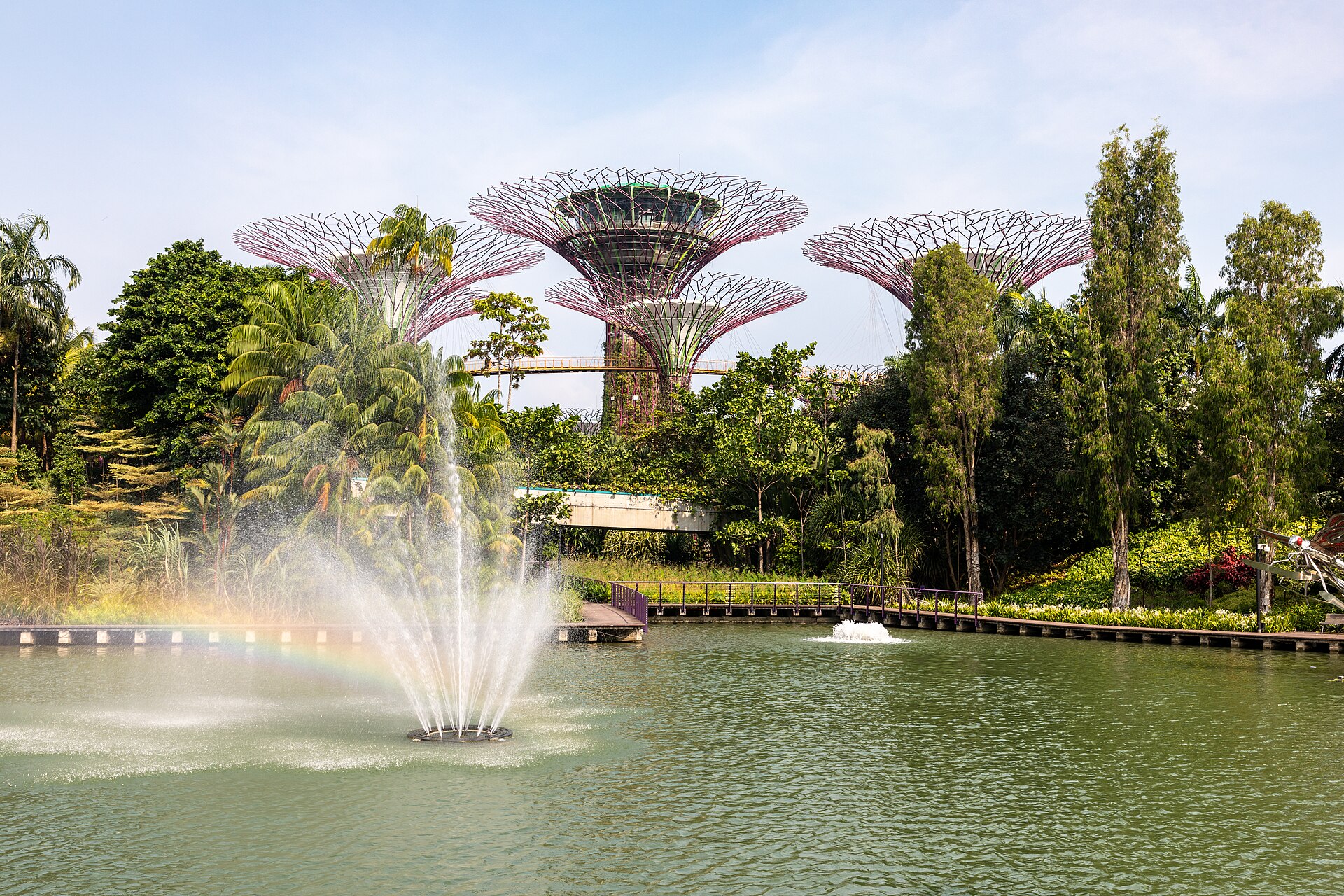
Free: the Supertree Grove, World of Plants, the Dragonfly and Kingfisher Lakes, and Bay East Garden. The Supertrees — vertical gardens up to fifty metres tall, lit and choreographed after dark — cost nothing to walk among, and the evening light show is free to watch from the ground.
Ticketed: the two conservatories. A combined Flower Dome and Cloud Forest ticket is S$46 adult, S$32 child (3–12). Cloud Forest alone is S$34 adult, S$29 senior (60+), S$26 child.
Good to know. If you are only doing one conservatory, make it the Cloud Forest — a thirty-five metre indoor waterfall inside a cooled mountain, with a walkway spiralling down through it. The Flower Dome is a large, pleasant, cool greenhouse, and considerably less memorable. The combined ticket is only S$12 more than Cloud Forest alone, so if you have the time, the Flower Dome is cheap as an add-on and poor value as a standalone.
Verdict: do it. Arrive late afternoon, do the conservatories while the sun is at its worst, and come out into the Supertree light show after dark.
Marina Bay, and the view you don’t need to buy

Free to walk. Allow 2 hours.
The circuit around Marina Bay — past the Merlion, over the Helix Bridge, along the front of Marina Bay Sands and back through Gardens by the Bay — is the single best free thing in Singapore and probably the best introduction to the city. Do it in the hour before sunset.
The Marina Bay Sands SkyPark observation deck sells a ticket for the view down. It is a genuinely striking vantage point. It is also the single most common thing visitors pay for and then describe as fine. The deck looks out over the bay — which means the thing you are looking at does not include the building you are standing on, and that building is the actual icon. The photograph you have in your head of Singapore is taken from the bay, not from the roof.
Verdict on the SkyPark: skip it unless a high view specifically matters to you. The free walk at ground level gets you the better picture.
Hawker centres
S$4–8 a dish. The best value in the country, by a distance.
Singapore’s hawker culture was added to UNESCO’s intangible cultural heritage list in 2020, and it remains the thing that makes an expensive city affordable. A plate of chicken rice, char kway teow, laksa or roti prata costs a few dollars in a food centre and considerably more in any restaurant serving the same thing.
- Maxwell Food Centre — central, famous, chicken rice. Busy at lunch.
- Chinatown Complex — the largest in the city, and where to go if you want range rather than a single famous stall.
- Old Airport Road — further out, more local, widely considered among the best for quality.
- Tiong Bahru Market — in the most attractive neighbourhood of the four, worth combining with a walk around the art deco estate.
- Lau Pa Sat — a Victorian cast-iron market hall in the financial district, with a satay street that opens in the evening. More touristed, architecturally the most interesting.
Good to know. A packet of tissues on a table means that seat is taken. This is a real and universally observed convention called choping, not litter. Reserve your own seat the same way before you queue, and never move someone else’s tissues.
The free half of Singapore
- Singapore Botanic Gardens — UNESCO-listed and free to enter. Only the National Orchid Garden inside it is ticketed.
- Chinatown, Little India and Kampong Glam — three distinct quarters, free to walk, with the Sri Mariamman and Sultan Mosque at their centres and the best street photography in the city.
- The Southern Ridges — a ten-kilometre connected walk across forested hills and elevated bridges on the south of the island. Almost no visitors do it.
- Jewel Changi — the airport’s indoor rain vortex and forest. Free, genuinely impressive, and a sensible use of a long layover.
- The Supertree light show — free, twice nightly, from the ground.
What it all costs
| Item | Adult price | Verdict |
|---|---|---|
| Marina Bay waterfront loop | Free | The best thing in the city |
| Gardens by the Bay, outdoor | Free | Do it |
| Supertree light show | Free | Do it |
| Botanic Gardens | Free | Do it |
| Jewel Changi rain vortex | Free | Perfect for a layover |
| Hawker centre meal | S$4–8 | Eat every meal here |
| Cloud Forest only | S$34 | The one to pick |
| Flower Dome + Cloud Forest | S$46 | Good if you have the time |
| Single MRT journey | S$0.90–2.20 | Just tap a bank card |
| Changi to city centre by MRT | S$2.00–2.50 | 30–40 minutes |
| Tourist Pass, 1 day | S$17 | Rarely pays off — see below |
| Tourist Pass, 3 days | S$29 | Rarely pays off — see below |
Getting around, and the Tourist Pass maths
The MRT is clean, fast, air-conditioned and cheap. Most single journeys cost between S$0.90 and S$2.20. Changi to the city centre is S$2.00–2.50 and takes 30–40 minutes.
You do not need a special card. Tap a contactless bank card or your phone at the gate and you are charged the normal adult fare. This is the simplest option for almost every visitor and it is what most residents now do.
Heads up: do the arithmetic on the Tourist Pass. The one-day pass costs S$17 and gives unlimited travel. At a typical fare of S$1.50, you would need to make roughly eleven separate journeys in one day to break even. The three-day pass at S$29 works out to under S$10 a day, which is better, but still needs six or seven rides daily. Most visitors make three or four. Unless you are deliberately criss-crossing the island, tapping a bank card will cost you less.
- Buses cover the gaps the MRT misses and take the same contactless tap.
- Taxis and Grab are reliable and metered or fixed, but meaningfully more expensive than the MRT and subject to real traffic at peak hours.
- Walking is pleasant in the Civic District and around the bay, and brutal in the open sun at midday. The city is extensively connected by underground malls and covered walkways — use them.
Mistakes to avoid
- Don’t buy the Tourist Pass by default. Run the numbers against the three or four journeys you will actually make.
- Don’t eat in restaurants when a hawker centre is across the road. This is the main reason people report Singapore as unaffordable.
- Don’t pay for the SkyPark expecting the classic skyline shot. That photograph is taken from the waterfront, looking at the building you would be standing on.
- Don’t move anyone’s tissue packet. It is a reserved seat.
- Don’t plan Orchard Road as sightseeing. It is malls.
- Don’t underestimate the drug laws. Singapore imposes severe penalties, including capital punishment for trafficking, and this applies to visitors in transit. There is no leniency worth gambling on.
- Don’t book a full day on Sentosa unless you want theme parks. The beaches are artificial and the attractions are individually ticketed on top of the island entry.
A two-day plan that works
- Day one — the bay. Morning in the Botanic Gardens while it is cool. Lunch at Tiong Bahru. Civic District and the river in the afternoon. Reach Gardens by the Bay around 4pm, do the Cloud Forest, come out for the Supertree show after dark, and eat satay at Lau Pa Sat.
- Day two — the quarters. Chinatown in the morning, including the Complex for lunch. Little India in the early afternoon. Kampong Glam and the Sultan Mosque late afternoon, then dinner wherever you ended up. If you have energy, the Marina Bay loop again at night — it is better the second time.
FAQ
How many days do you need in Singapore?
Two full days covers the city comfortably. Three if you want Sentosa or a slower pace. It is a common and sensible three-day stop between longer legs elsewhere in the region.
Is Singapore really that expensive?
Accommodation and alcohol are genuinely expensive. Food and transport are not — a hawker meal runs S$4–8 and an MRT ride about S$1.50. Visitors who eat at hawker centres and use the MRT often spend less per day here than in Bali, where transport costs add up quickly.
Is the Singapore Tourist Pass worth it?
Usually not. At S$17 for one day against fares of roughly S$1.50 a ride, it needs about eleven journeys to break even. The multi-day versions are better value but still assume far more travel than a typical visitor does. Tap a contactless bank card instead.
Which Gardens by the Bay ticket should you buy?
Cloud Forest at S$34 if you are choosing one. The combined ticket at S$46 adds the Flower Dome for S$12, which is worth it if you have a spare hour and poor value if you are rushing. The outdoor gardens and the Supertree show cost nothing either way.
Is a long Changi layover worth leaving the airport for?
With more than five or six hours, yes — the MRT reaches the city in 30–40 minutes for about S$2.50. With less, stay inside and see Jewel, which is free and more impressive than most ticketed attractions in the city.