Bali has a problem that most destinations would love to have: it is so thoroughly photographed that people arrive with a list of images to reproduce rather than a plan. The island rewards almost the opposite approach. The famous sights are mostly fine and mostly crowded; the good days come from picking one region and staying in it.
There is also a fee you need to deal with before you fly. Since February 2024 every foreign visitor owes a one-time tourist levy of IDR 150,000, and since 2025 officials have actively scanned for proof of payment at the major temples. This guide covers where to go, what it costs as of November 2026, and how to avoid losing your trip to traffic.
Pay the tourist levy before you land
The levy is formally the Pungutan Wisatawan Asing, introduced under Bali Provincial Regulation No. 6 of 2023 and in force since February 2024. The details that matter:
- IDR 150,000 per person, roughly USD 10. One payment covers your whole stay.
- There is no child discount. A family of four owes IDR 600,000.
- It is entirely separate from your visa or visa-on-arrival fee, and separate again from the harbour fees charged for Nusa Penida and the Gili Islands.
- It does not cover temple entry. Every site still charges its own admission on top.
- Pay online through the official Love Bali platform and keep the QR voucher on your phone.
Heads up. Enforcement has tightened every year since launch. Officials now scan vouchers at Tanah Lot, Uluwatu, Tirta Empul and Penglipuran, and run spot-checks around the airport. Paying in advance online takes two minutes; sorting it out in a queue at a temple gate does not.
How the island is laid out
Bali is bigger than it looks and slower than it looks. Distances on a map bear almost no relation to journey times, because the roads in the populated south are a single-lane tangle shared with several million scooters. Pick a base and accept that you will not be doing day trips to the other end of the island.
- Ubud — the cultural interior. Rice terraces, temples, art, yoga, and the island’s best food scene. Not quiet, but the reason most people’s Bali photos look the way they do.
- The Bukit peninsula (Uluwatu, Bingin, Padang Padang) — limestone cliffs, the best beaches, serious surf, and the sunset temple. The most dramatic landscape on the island.
- Canggu and Seminyak — the beach-club and café strip. Busy, developed, heavy on traffic, strong on food and nightlife.
- Sanur and Nusa Dua — calm, flat, family-oriented, east- and south-coast. Dull if you want nightlife, excellent if you want a beach and a quiet road.
- The east and north (Amed, Sidemen, Lovina) — far less visited, genuinely rural, and where Bali still feels like the island people describe from twenty years ago.
The standard first trip is Ubud plus one coastal base, split roughly evenly. That works. Trying to add a third region in a week does not.
Best time to visit
April to October is the dry season and the reliable window. November to March is the wet season, with heavy afternoon rain, higher humidity and — on the west and south coasts — seasonal marine debris washing ashore, which is the single most under-reported fact about low-season Bali beaches.
July and August are dry but peak — expect the highest prices and the worst traffic of the year. May, June and September are the sweet spot: dry season weather without peak season volume.
Heads up: check the date of Nyepi. Bali’s Day of Silence is a full 24-hour shutdown of the entire island, usually in March. Nobody goes outside, no lights, no traffic, and the airport closes completely — no arrivals, no departures. Hotels stay open and you stay inside them. It is a genuinely remarkable thing to experience on purpose and a disaster to walk into by accident, because the date moves each year with the Balinese calendar.
Uluwatu Temple
IDR 60,000 adult, IDR 40,000 child. Allow 2–3 hours with the dance.
A small temple in a spectacular position, perched on a cliff edge roughly 70 metres above the Indian Ocean on the south-western tip of the Bukit. The building itself is modest. The clifftop walk either side of it is the attraction, and it is genuinely one of the best coastal views in Southeast Asia.
The Kecak fire dance runs in a clifftop amphitheatre at sunset and is ticketed separately from temple entry. It is a performance for visitors rather than a religious ceremony, and it is still worth seeing — a chanting male chorus of a hundred or so voices, no instruments, with the sun going down behind the stage. Buy tickets on arrival at the temple, earlier in the day, because the good seats go.
Heads up: the monkeys here are professionals. The macaques at Uluwatu specialise in taking sunglasses, phones and hats, and then holding them until a staff member trades fruit for the item. This is learned, organised behaviour, not bad luck. Put everything in a zipped bag before you reach the gate, and do not wear sunglasses on your head.
Verdict: do it. The best-value ticket on the island at IDR 60,000, provided you go for the cliffs rather than the temple.
Tanah Lot
IDR 75,000 adult, IDR 40,000 child. Allow 2 hours.
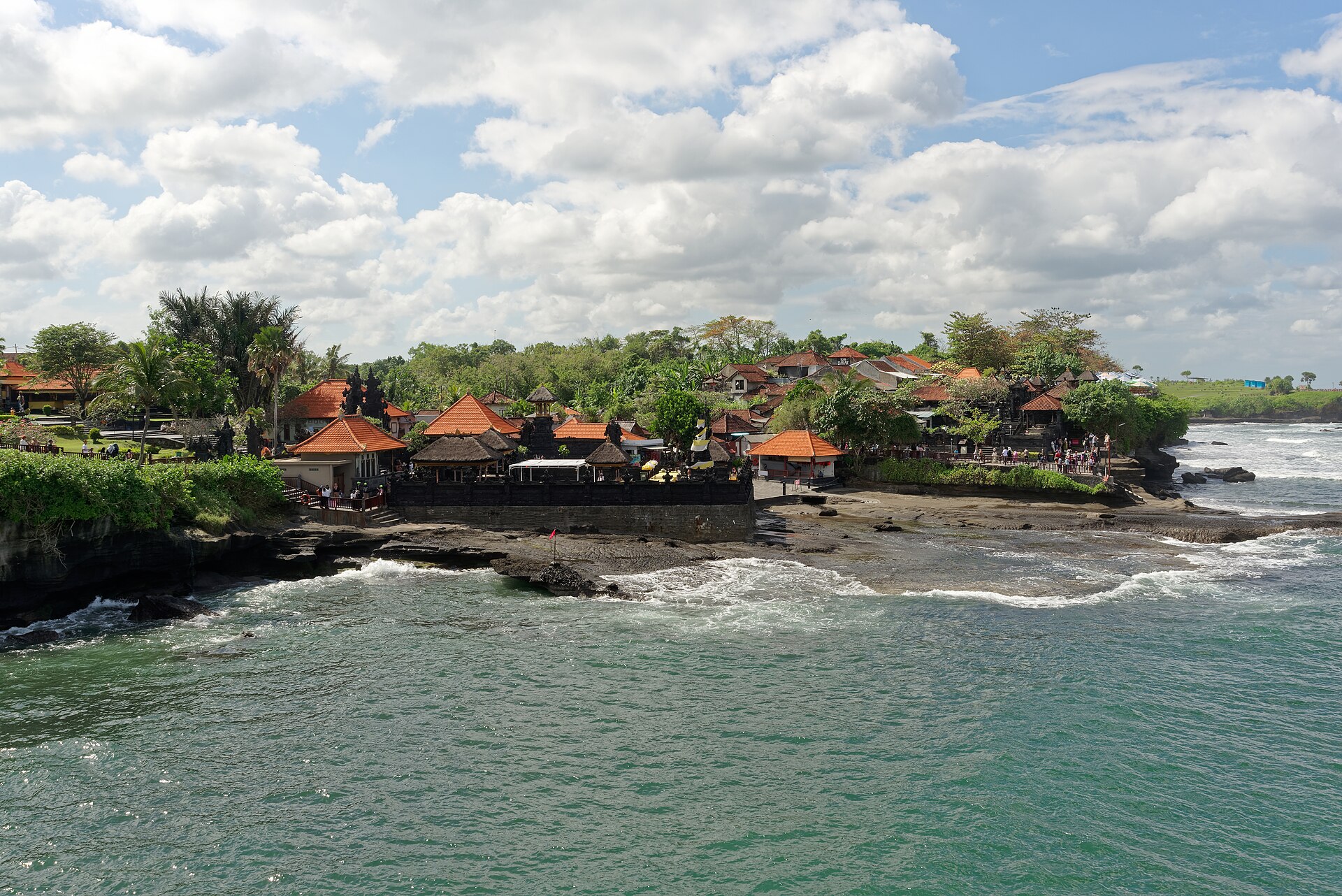
The sea temple on a rock, and the most photographed object in Bali. At high tide it is an island; at low tide you can walk to the base. You cannot enter the temple itself — it is an active site closed to non-worshippers — so what you are buying is the view and the approach.
Be honest with yourself about what this visit is. The setting is genuinely beautiful at sunset. It is also comprehensively commercialised: you walk in through a long market corridor, the viewing areas are crowded, and the sunset slot is shoulder-to-shoulder. People who go expecting a contemplative sea temple are routinely disappointed. People who go expecting a famous view with several hundred others enjoy it fine.
Verdict: go, but not at sunset unless you are prepared for the crush. Late morning is quieter, the tide chart matters more than the clock, and the rock photographs well in flat light.
Ubud and the rice terraces

Terraces free to view; small donations collected on the walking paths. Allow a half day.
Tegallalang, about twenty minutes north of Ubud, is the terrace everyone photographs. The roadside viewpoints cost nothing. Walking down into the terraces themselves is a different matter: the land is privately farmed, and you will be asked for a donation at several points on the way down, typically a small amount each time. This is legitimate and worth budgeting a handful of small notes for — it is not a scam, it is how the farmers are compensated for the footfall.
Tegallalang is also busy and increasingly built-up with swings and photo platforms charging their own fees. If that is not what you want, the terraces around Jatiluwih in the centre of the island are vastly larger, UNESCO-listed, far less visited, and a much better walk — at the cost of a longer drive.
In Ubud itself, the Sacred Monkey Forest Sanctuary is a genuine forest temple complex with a large macaque population and a modest entry fee. The same warning as Uluwatu applies, with the addition that these monkeys will climb on you.
Tirta Empul and the water temples
Modest entry fee plus sarong rental. Allow 2 hours.
A spring-fed purification temple north-east of Ubud where Balinese Hindus bathe under a row of carved water spouts. Visitors can take part in the ritual bathing, which requires a specific sarong and a reasonable amount of respect for what is going on around you — this is an active religious site and the people queueing beside you are there to worship, not to swim.
Go early. By mid-morning the pools are full and the experience shifts from ceremonial to logistical. Tirta Empul is one of the sites where levy QR codes are checked.
What it all costs
| Item | Foreign adult | Verdict |
|---|---|---|
| Bali tourist levy (one-time) | IDR 150,000 | Mandatory — pay online first |
| Uluwatu Temple | IDR 60,000 | Best value on the island |
| Tanah Lot | IDR 75,000 | Go off-peak |
| Tegallalang viewpoints | Free | Yes |
| Tegallalang terrace walk | Small donations en route | Carry small notes |
| Kecak dance at Uluwatu | Ticketed separately | Worth it, buy early |
| Airport to Seminyak/Canggu by Grab | IDR 120,000–350,000 | Cheapest reliable option |
| Pre-booked private transfer | IDR 150,000–450,000 | Worth it with luggage |
Getting around
Traffic is the defining constraint of a Bali trip. A 25 km journey in the south can take well over an hour. Plan two things a day, not four.
- Grab and Gojek both work across the island and are the cheapest reliable way to move. Fares are fixed in-app, which removes the negotiation entirely.
- At the airport, ride-hailing is permitted but not from the terminal kerb. You must walk roughly 400 metres to the designated online taxi pickup zone — an arrangement between the airport and the local taxi cooperatives. Expect IDR 120,000–350,000 to the southern beach areas.
- A private driver for the day is the standard way to see inland sights, and genuinely good value if there are two or more of you. It removes the problem of finding a ride back from a temple in the middle of nowhere.
- Scooters are everywhere and are how most residents move. Be clear-eyed: Bali’s road casualty rate among visitors is high, many travel insurance policies will not pay out without the correct licence category, and police checks on foreign riders are routine. Helmet always.
Mistakes to avoid
- Don’t arrive without paying the levy. It takes two minutes online and is checked at the gates of the sites you are most likely to visit.
- Don’t plan a day with four stops. The traffic will beat you. Two is realistic, three is ambitious.
- Don’t book flights across Nyepi without checking the date. The airport genuinely closes for 24 hours.
- Don’t wear sunglasses on your head at Uluwatu or the Monkey Forest. You will lose them, and you will pay fruit to get them back.
- Don’t expect the south-west beaches to look like the photos in wet season. Seasonal debris on the Kuta–Seminyak stretch between roughly December and March is normal and significant.
- Don’t assume a temple will let you in dressed as you are. A sarong and sash are required at active temples. Most sites rent or include them, but carrying your own saves queueing and money.
- Don’t ride a scooter without the right licence. It is the single most common way a Bali trip turns into an insurance problem.
A one-week plan that works
- Days one to three — Ubud. Arrive, pay the levy if you have not. Tegallalang or Jatiluwih early on day two, Tirta Empul at opening on day three, and the Monkey Forest or the Ubud market in between. Eat well; this is the best food on the island.
- Days four to six — the Bukit. Move south to Uluwatu or Bingin. Beaches in the morning, the clifftop temple and the Kecak dance one evening, and nothing scheduled on at least one of the days.
- Day seven — the coast road out. Tanah Lot in late morning on the way back north if you are flying from Denpasar, which puts it roughly on your route rather than costing you a dedicated trip.
FAQ
How many days do you need in Bali?
Seven to ten. Fewer than five and the traffic eats a meaningful share of your trip. Split the time between two regions rather than trying to cover the island from one base.
Do you really have to pay the Bali tourist tax?
Yes. It is a provincial regulation, it applies to all foreign visitors, there is no child exemption, and since 2025 it has been actively checked at major temples. Pay it online through the Love Bali platform before you fly and save the QR code offline.
Is Ubud or the coast better for a first trip?
Do both, in that order. Ubud first while you are still adjusting and want things to look at, the coast second when you want to stop moving. Going coast-first tends to mean you never leave the beach.
Is Bali expensive?
It is cheap to eat and sleep in and moderately priced to sightsee in — temple entries are a few dollars each. The costs that surprise people are transport, because distances are slow and private drivers add up, and the beach clubs in Seminyak and Canggu, which are priced like Europe.
What should you wear at the temples?
Shoulders and knees covered, plus a sarong and sash at active temples, which most sites will rent you or include in the ticket. At Tirta Empul, ritual bathing has its own dress requirements — follow what the people around you are doing, and if you are unsure whether you should be in the water, you probably should not be.