Hanoi is the cheapest capital in this part of Asia and the one that asks the most of you. The Old Quarter is loud, dense and relentless with motorbikes, the pavements are parking spaces rather than walkways, and crossing a road is a skill you acquire in the first hour whether you want to or not.
It is also the most rewarding city on a Southeast Asia trip for anyone who likes eating. Almost nothing here costs real money — the headline museum is under three dollars and the single most famous building is free. This guide covers where to go, what it costs as of November 2026, and the two scheduling traps that catch people out.
How the city is laid out
Central Hanoi is compact and best covered on foot. Three areas account for nearly everything:
- The Old Quarter — the medieval trading grid north of the lake, traditionally “36 streets”, each originally dedicated to a single trade. Most people stay here, and should.
- Hoan Kiem Lake and the French Quarter — the lake at the city’s centre, with Ngoc Son Temple on an island in it, and the wider colonial-era boulevards to the south and east.
- Ba Dinh — the political district west of the Old Quarter. The Ho Chi Minh Mausoleum, the One Pillar Pagoda, the Presidential Palace grounds and the Temple of Literature all sit within a walk of each other here.
You can walk from the Old Quarter to Ba Dinh in about half an hour. Nearly everything else worth seeing is a short Grab ride.
Best time to visit — and the winter warning
Hanoi is in northern Vietnam and has genuine seasons, which is the single most commonly misunderstood fact about the city. It is not a year-round tropical climate like Bangkok or Singapore.
Heads up: Hanoi in winter is cold. Between roughly December and February, temperatures regularly sit in the low to mid teens Celsius and can drop below 10°C, with persistent damp grey drizzle and very little sunshine. Buildings are built for summer heat and most have no heating. People arrive from Bangkok in shorts and spend three days shivering. Pack a proper jacket and warm layers for a January trip.
October and November are the best months — dry, mild, clear, and the reason Hanoi has a reputation for beautiful autumns. March and April are the second window, warming up and mostly pleasant. June to August is hot and humid, pushing past 35°C with heavy rain and the occasional typhoon remnant.
Also check the date of Tết, the lunar new year, usually in late January or February. The city empties as people travel home, a great many businesses close for several days, and prices on transport spike.
The Old Quarter
Free. Allow as long as you have.
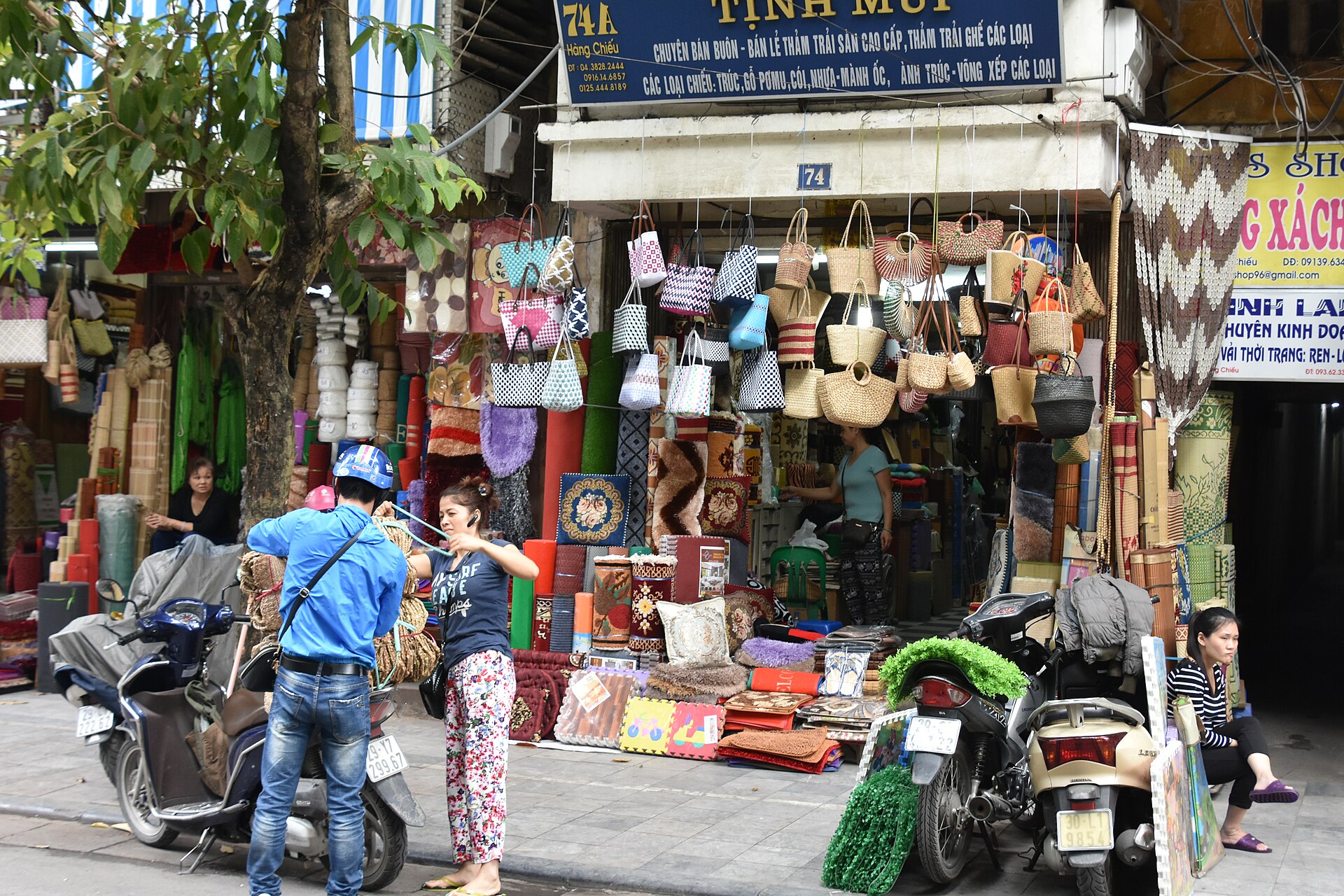
The best thing in Hanoi has no ticket. The Old Quarter’s streets still carry their guild names — Hàng Bạc for silver, Hàng Gai for silk, Hàng Thiếc for tin — and a surprising number still roughly do the trade they are named for. Hàng Thiếc remains full of men beating sheet metal into buckets on the pavement.
There is no route worth following. Pick a direction, accept that you will get lost, and stop frequently for coffee, which is what the streets are really for.
Good to know: how to cross the road. Traffic does not stop, and waiting for a gap means waiting forever. Step out at a slow, steady, entirely predictable pace and keep going. Motorbikes will flow around you — they are reading your trajectory and adjusting. The dangerous thing is stopping suddenly or running, because it breaks the prediction. Watch a local do it once and copy them exactly.
From Friday evening until Sunday night, the roads around Hoan Kiem Lake close to traffic entirely and become walking streets, filling with families, street games and performers. If your dates allow it, be in Hanoi for a weekend — the city becomes an entirely different and far gentler place.
Hoan Kiem Lake and Ngoc Son Temple

Lake free; temple a small entry fee. Allow an hour.
The lake is the centre of the city in a way that goes well beyond geography — it is where Hanoi exercises at six in the morning, courts in the evening, and gathers on weekends. Walking a full circuit takes about twenty-five minutes.
Ngoc Son Temple sits on a small island reached by the red lacquered Huc Bridge, and charges a modest entry fee. It is small and takes fifteen minutes. Go early — the bridge is one of the most photographed objects in Vietnam and by mid-morning you are queueing to stand on it.
The Temple of Literature

70,000 VND. Open daily 8am–5pm. Allow 1–2 hours.
Vietnam’s first national university, founded in the eleventh century, laid out as five walled courtyards running back from the main gate. It is the calmest place in central Hanoi and the best value ticket in the city at roughly three dollars.
The detail worth slowing down for is the stelae — stone tablets mounted on carved tortoises, each listing the names of doctoral graduates from a specific examination, some dating back to the fifteenth century. You will see students here being photographed in graduation robes, which has been going on in one form or another for about six hundred years.
Verdict: do it. Go first thing or in the last hour before closing.
The Ho Chi Minh Mausoleum
Free. Very restricted hours. Allow 1–2 hours with the queue.
Free to enter, and the most tightly scheduled sight in the city. This is where most itineraries break.
Heads up — the opening hours are the whole problem. The mausoleum opens Tuesday, Thursday, Saturday and Sunday only, from 8:00am to 11:00am. It is closed every Monday and Friday, year-round.
On top of that it closes completely for annual maintenance, a period of roughly two months — in 2026 that ran from approximately 4 September to 4 November. The dates shift each year. If seeing it matters to you, check the current closure period before you book, because a three-day Hanoi trip that lands on a Monday and a Friday will miss it entirely even in an open month.
Rules inside are strict and enforced without discussion: cover shoulders and knees, no hats, no talking, no hands in pockets, no photography, and no stopping as you file past. Large bags and cameras must be left at the designated counter before you join the queue. Arrive by 8am; the line closes well before 11.
The surrounding Ba Dinh complex — the One Pillar Pagoda, the Presidential Palace grounds, the stilt house — is in the same compound and makes the trip worthwhile even if the mausoleum itself is shut.
Train Street
No ticket, but access is controlled. Allow an hour.
The narrow residential lane where a working railway runs within arm’s reach of the front doors. Its status has been complicated since authorities first ordered it closed to visitors in October 2019 on safety grounds, and it has been shut and reopened repeatedly since.
In practice as of late 2026, the trackside cafés operate and you reach the rails through a café rather than by walking freely down the lane. Entry points are monitored, you are expected to buy a drink, and staff close the gates and clear the track several minutes before each train. Check the current timetable with the café rather than relying on a schedule you found online.
Verdict: go if you are curious, but keep it in proportion. It is a narrow lane with a train in it, it is busier than the photographs suggest, and the rules change. Do exactly what the café staff tell you.
The food, which is the real reason
Hanoi is a street-food city first and a sightseeing city second. Prices are low enough that cost stops being a consideration — most dishes land in the 40,000–80,000 VND range, well under four dollars.
- Phở — northern style, clearer and plainer than the southern version, eaten for breakfast.
- Bún chả — grilled pork and noodles in a dipping broth, and Hanoi’s signature dish above all others.
- Bánh mì — the baguette sandwich, best from a cart.
- Cà phê trứng — egg coffee. A whipped egg yolk and condensed milk custard over strong coffee, invented here during a dairy shortage. It sounds wrong and is excellent.
- Bia hơi — fresh unpasteurised draught beer, brewed daily, poured on street corners at a few thousand dong a glass. Among the cheapest beer anywhere in the world.
Eat where the plastic stools are full. Sit low, expect to share a table, and pay at the end.
What it all costs
| Item | Price | Verdict |
|---|---|---|
| Old Quarter and Hoan Kiem Lake | Free | The main event |
| Weekend walking streets | Free | Time your trip for it |
| Ho Chi Minh Mausoleum | Free | Check the hours first |
| Ngoc Son Temple | Small entry fee | Go early |
| Temple of Literature | 70,000 VND | Best ticket in the city |
| Street food dish | 40,000–80,000 VND | Every meal |
| Bia hơi, a glass | A few thousand VND | Yes |
| Grab, Noi Bai airport to Old Quarter | 280,000–380,000 VND | Simplest option |
| Bus 86, airport to Old Quarter | A fraction of a Grab | Slower, perfectly comfortable |
Getting around
- Walk the centre. The Old Quarter, the lake and the French Quarter are all within twenty minutes of each other, and traffic means walking is often faster than riding.
- Grab for everything else — both cars and motorbike taxis. Fares are fixed in the app, which removes the negotiation that street xe ôm drivers will otherwise start.
- From Noi Bai airport, about 27 km north: Grab runs 280,000–380,000 VND to the Old Quarter. Bus 86 is the public alternative, far cheaper, air-conditioned, with luggage space, and it terminates near the lake. It is a genuinely good option, not a budget compromise.
- Taxis — stick to the large established companies or just use Grab. Meter tampering on airport runs is a known problem with unmarked cars.
- Renting a motorbike is not recommended for a first visit to Hanoi specifically. The traffic density here is a different proposition from rural Vietnam.
Mistakes to avoid
- Don’t assume the mausoleum will be open. Four mornings a week, 8–11am only, plus a two-month annual closure that moves each year.
- Don’t pack for the tropics in winter. January in Hanoi is cold, damp and largely unheated indoors.
- Don’t stop or run while crossing a road. Steady and predictable is the whole technique.
- Don’t expect Train Street to work the way it did in older guides. Access is through a café, monitored, and subject to change.
- Don’t take an unmarked taxi from the airport. Use Grab or Bus 86.
- Don’t book over Tết without checking. Much of the city closes and transport prices spike.
- Don’t skip the weekend. The car-free walking streets around Hoan Kiem are one of the best things the city does.
- Don’t over-schedule Ha Long Bay. A single day trip from Hanoi is four-plus hours in a vehicle for a couple of hours on the water. Either stay overnight or leave it.
A three-day plan that works
- Day one — the Old Quarter. Phở for breakfast, then walk the 36 streets with no route. Ngoc Son Temple and the lake in the late afternoon. Bún chả for dinner, bia hơi after, egg coffee last.
- Day two — Ba Dinh, on a Tuesday, Thursday, Saturday or Sunday. Mausoleum queue by 8am, then the One Pillar Pagoda and the Presidential Palace grounds in the same compound. Walk to the Temple of Literature for late morning. Afternoon at Hoa Lo Prison or, if you have the time for the ride out, the Museum of Ethnology, which is the best museum in the country.
- Day three — out of the city. Ninh Binh is the better day trip than Ha Long — limestone karsts, rice fields and a rowing boat, around two hours each way. Back for a last dinner in the Old Quarter.
FAQ
How many days do you need in Hanoi?
Three. Two for the city and one for a trip out to Ninh Binh. Make sure at least one of your days is a Tuesday, Thursday, Saturday or Sunday if the mausoleum matters, and try to include a weekend for the walking streets.
Is Hanoi cold in winter?
Yes, genuinely. December to February sits in the low to mid teens Celsius and can fall below 10°C, with damp grey drizzle and very little sun. Most buildings have no heating. This surprises almost everyone arriving from southern Vietnam or Thailand.
Is Train Street open?
Partly, and the situation has changed repeatedly since the first closure order in 2019. As of late 2026 the cafés operate and you access the track through one of them rather than walking the lane freely, with gates closed before each train. Treat any specific guidance as provisional and follow the staff on the ground.
Is Hanoi or Ho Chi Minh City better?
Hanoi for history, atmosphere and food; Ho Chi Minh City for energy, modernity and nightlife. Hanoi is the older and stranger of the two and the better choice if you have to pick one. They are also very different in climate — the south is tropical year-round, the north is not.
How do you get from Noi Bai airport into the city?
Grab runs 280,000–380,000 VND to the Old Quarter, roughly 11–15 US dollars. Bus 86 costs a fraction of that, is air-conditioned with luggage space, and stops near Hoan Kiem Lake. Avoid unmarked taxis touting inside the terminal.