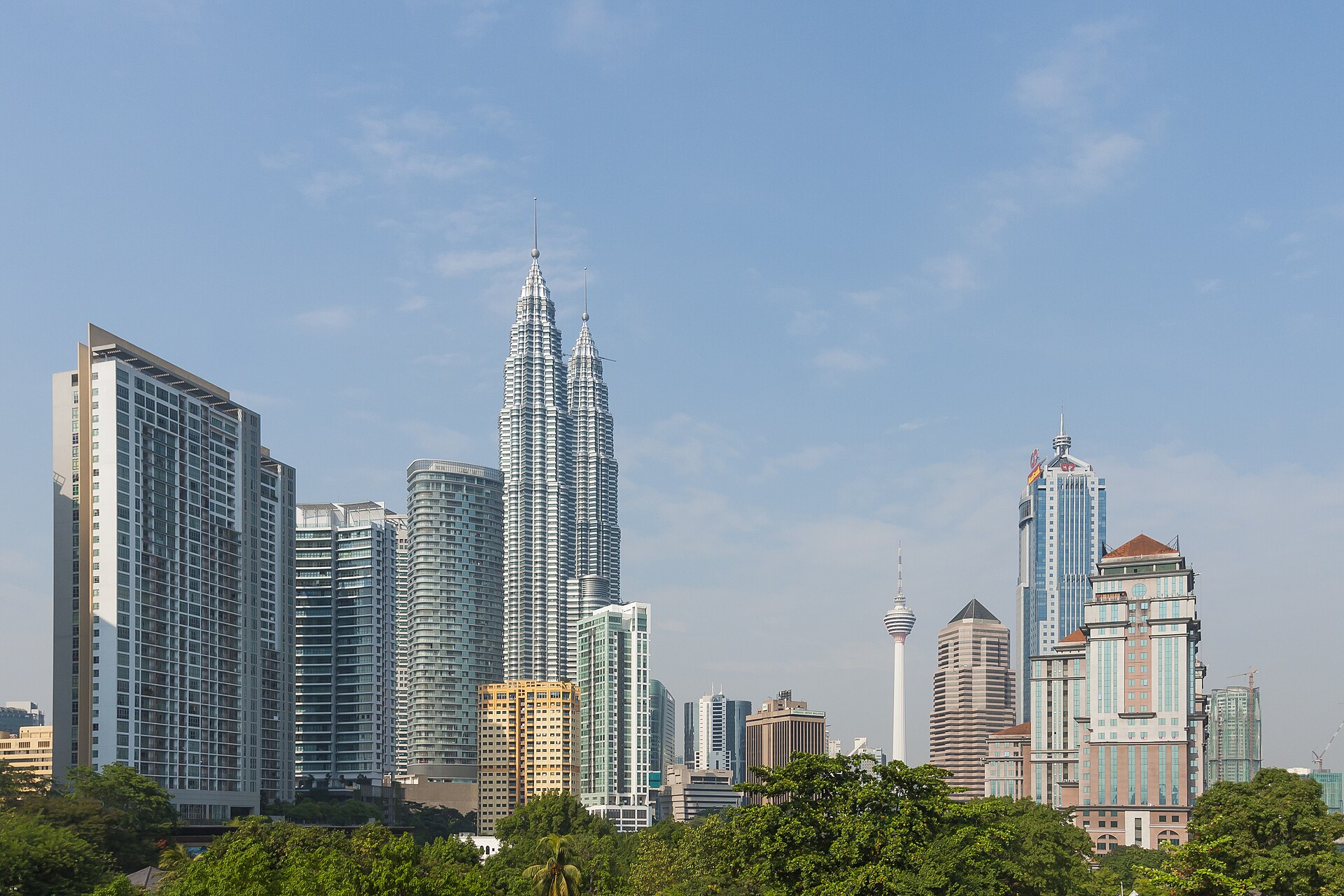
Kuala Lumpur is one of the cheapest major cities in Asia to eat and sleep in, and one of the more expensive to sightsee in — if you’re a foreigner. Most of the headline attractions charge visitors roughly three times what Malaysians pay. The Petronas Twin Towers cost a Malaysian adult RM 42 on a weekday. They cost you RM 127.
That single fact should shape how you plan. The good news is that a lot of the best of KL — the temples, the street food, the colonial core, the markets — is free or close to it. This guide covers where to actually go, what each place costs as of October 2026, and which famous names are not worth your ringgit.
How the city is laid out
KL looks sprawling on a map but the sightseeing clusters into four areas, and the rail network connects all of them. Understanding this saves you a lot of wasted Grab fares.
- KLCC — the Petronas Towers, the park, the mall, the aquarium. Glossy, modern, the postcard KL.
- Bukit Bintang — shopping, nightlife, and Jalan Alor’s food street. A 15-minute walk from KLCC via an air-conditioned covered walkway.
- The colonial core and Chinatown — Merdeka Square, Sultan Abdul Samad Building, Petaling Street, Central Market. The oldest and most atmospheric part of the city.
- Lake Gardens (Perdana) — the Islamic Arts Museum, the Bird Park, the Botanical Gardens. Green, quiet, and criminally under-visited.
Batu Caves sits outside all of this, 13 km north, on its own train line.
Best time to visit
KL is hot and humid year-round — expect low 30s°C every single day — so you’re not picking a season for temperature. You’re picking one for rain and haze.
June to August is the driest and most reliable window. April and October are the two wettest months of the year, both inter-monsoon transition periods with the heaviest thunderstorm activity. November to January brings the northeast monsoon and the most sustained rain.
One caveat on the June–August recommendation: August and September carry haze risk from agricultural fires in Sumatra and Borneo. In a bad haze year the skyline views you came for simply aren’t there. If towers and viewpoints are your priority, June and July are the safest bet.
Rain here is usually a violent late-afternoon downpour rather than all-day drizzle, so even in a wet month you can plan outdoor sightseeing for mornings and museums for 4pm onwards.
Batu Caves

Free. Allow 2–3 hours including travel.
If you do one thing in KL, do this. A 42-metre gold statue of Lord Murugan stands at the foot of 272 rainbow-painted steps leading into a limestone cavern with a Hindu temple inside it. The Temple Cave, the staircase, the statue and the whole forecourt cost nothing to enter.
Get there on the KTM Komuter from KL Sentral — RM 2.60 cash, about 15% less with a Touch ‘n Go card, and the line terminates at Batu Caves so you cannot miss your stop. Journey time is around 30 minutes but trains run roughly hourly, so check the timetable before you leave rather than turning up and waiting.
Go early. The site opens at 7am and by 10am the steps are crowded and the heat on that unshaded staircase is punishing.
Dress code is enforced. Shoulders and knees covered for the temple areas. Sarongs are available to borrow or buy at the entrance for around RM 5–10, but turning up appropriately dressed saves the hassle.
The monkeys are thieves, not threats. The macaques on the staircase will snatch food, phones, sunglasses and anything shiny straight out of your hands or an open bag. Zip everything shut and don’t eat on the steps.
Two paid add-ons sit at the base: Ramayana Cave (around RM 5 adult) and Cave Villa (around RM 15 for non-Malaysians). Ramayana Cave is a genuinely odd, fun diorama of the Ramayana epic and worth the pocket change. Cave Villa is tired and skippable.
The Dark Cave is permanently closed. It shut in 2019 and the Malaysian Nature Society confirmed in February 2026 that it will not reopen. Plenty of guides and tour listings still advertise it. You’ll see the sealed entrance partway up the stairs and that’s all.
Petronas Twin Towers

RM 127 weekday / RM 137 weekend for non-Malaysian adults. Allow 1.5 hours inside.
Evening slots cost more — around RM 147 weekday and RM 157 weekend. A standard ticket covers both the Skybridge on levels 41–42 and the Observation Deck on level 86. Malaysians pay RM 42–53 for the same ticket.
Here is the honest verdict: the towers are more impressive from the outside than from inside them. You cannot see the Petronas Towers from the top of the Petronas Towers, and they are the thing you came to look at. Timed slots sell out days ahead in peak season and must be booked through the official site.
If you want the skyline photo everyone has, you don’t need a ticket at all. KLCC Park, directly behind the towers, is free, open from early morning, and gives you the full reflection shot across the fountain pool. The Lake Symphony fountain show runs there in the evenings, also free.
Go up if standing inside an icon matters to you. Skip it if you mainly want a view — the next entry does that better.
KL Tower (Menara Kuala Lumpur)
RM 80 observation deck, RM 140 Sky Deck, RM 180 combo for non-Malaysian adults. Allow 1–2 hours.
Discounted rates are widely available through booking platforms — often around RM 65 for the observation deck — so it is worth comparing before you buy at the counter.
The reason to come here instead of the Petronas Towers is simple: this is the viewpoint the Twin Towers are actually in. The open-air Sky Deck adds the Sky Box, a glass cube jutting out over the edge, for RM 10 extra. Queues for the Sky Box get long — it’s one person at a time for a photo.
The tower sits inside a patch of protected rainforest, the Bukit Nanas Forest Eco Park, which is free to walk through and a genuinely strange thing to find in a capital city centre.
The Lake Gardens: Islamic Arts Museum and the Bird Park
This is the part of KL that most short-stay visitors miss entirely, and it’s where two of the city’s best attractions sit.
Islamic Arts Museum Malaysia

RM 20 adult, RM 10 students, free under 6. Open 9:30am–6pm daily. Allow 2–3 hours.
The single best-value ticket in the city, and one of the few places with no foreigner surcharge — RM 20 is RM 20 whoever you are. The collection spans manuscripts, textiles, ceramics and architectural models across the Islamic world, housed in a beautiful building with domed ceilings worth the entry on their own. The air conditioning is excellent, which matters more than you’d think at 2pm in KL.
KL Bird Park
Around RM 85 for non-Malaysian adults. Allow 2–3 hours.
Billed as the world’s largest free-flight walk-in aviary, and the free-flight sections genuinely deliver — hornbills and storks moving around you rather than behind glass. Prices quoted online vary quite a bit (RM 63 to RM 90 depending on the seller), so shop around and make sure you select the “Non-Malaysian” category when booking or you’ll be turned away at the gate.
At RM 85 this is the most expensive thing on this list after the towers. Worth it if you’re travelling with kids or you like birds; easy to skip otherwise.
Thean Hou Temple

Free. Open 8am–8pm daily. Allow an hour.
A six-tiered Chinese temple on a hill south of the centre, hung with hundreds of red lanterns and looking out over the city. It’s one of the largest Chinese temples in Southeast Asia, it costs nothing, and it is substantially less crowded than anything in the city centre.
It’s awkward to reach on public transport — this is the one place where a Grab is genuinely the right call. Go late afternoon and stay for sunset over the skyline.
Merdeka Square, Chinatown and Central Market

Free to walk. Allow half a day for the lot.
The colonial core is best done on foot in a single loop, early morning before the heat builds.
- Merdeka Square — where Malaysian independence was declared in 1957, framed by the Moorish-revival Sultan Abdul Samad Building. Free, and photogenic in early light.
- Masjid Jamek — the city’s oldest mosque, at the confluence of the two rivers KL is named after. Free to enter outside prayer times; robes provided.
- Petaling Street (Chinatown) — a covered market street. Worth walking once for the atmosphere and the food stalls on the side lanes. The goods are counterfeit and the opening price is roughly triple what you should pay.
- Central Market — an art-deco former wet market now full of batik, crafts and souvenirs. Fixed prices, air-conditioned, and a far less exhausting place to buy gifts than Petaling Street.
Jalan Alor

RM 25–45 a head for dinner. Opens from around 6pm.
KL’s best-known food street, a few minutes’ walk from Bukit Bintang. Plastic stools, open grills, and the whole street operating at once after dark. Satay runs about RM 1 a stick, char kway teow RM 7–12, laksa RM 8–13.
Be aware this is tourist-priced by KL standards — a neighbourhood hawker centre will serve you the same dishes for half as much, and some Jalan Alor stalls add charges for rice, drinks and wet towels. Check prices before ordering rather than after.
Go anyway. The atmosphere is the point, and RM 30 for dinner is still cheap.
What it all costs
| Attraction | Non-Malaysian adult | Verdict |
|---|---|---|
| Batu Caves (Temple Cave) | Free | Do it |
| Thean Hou Temple | Free | Do it |
| Merdeka Square & Chinatown | Free | Do it |
| KLCC Park & fountain show | Free | Do it |
| Ramayana Cave | ~RM 5 | Worth the pocket change |
| Islamic Arts Museum | RM 20 | Best value in KL |
| KL Tower observation deck | RM 80 (often ~RM 65 online) | Better view than Petronas |
| KL Bird Park | ~RM 85 | Only if you like birds |
| Petronas Twin Towers | RM 127–157 | Overpriced, but iconic |
| KL Tower Sky Deck + Sky Box | RM 150 | Skip unless you want the photo |
Getting around
Buy a Touch ‘n Go card the moment you arrive. It costs RM 10–15, works across MRT, LRT, monorail, KTM Komuter and buses, and gets you cheaper fares than single tickets. It is the single best RM 15 you’ll spend in Malaysia.
- From the airport: KLIA Ekspres to KL Sentral takes 28 minutes and costs RM 55 one way, RM 100 return. Trains every 20 minutes. A Grab is usually cheaper for two or more people but takes an hour in traffic.
- Around the city: MRT and LRT fares run RM 1–5.50 depending on distance. Clean, air-conditioned, and faster than the roads.
- Grab: typically RM 15–25 for a cross-city trip. Use it for Thean Hou Temple and late nights. Always Grab rather than a street taxi — metered taxis here have a long history of refusing the meter for foreigners.
- GOKL City Bus: loops the tourist areas. No longer free for foreigners — it has been RM 1 per trip for non-Malaysians since January 2025, payable only by Touch ‘n Go or card. Malaysians still ride free. A great many guides have not updated this.
One thing the maps won’t tell you: KL is a genuinely bad walking city in places. Pavements vanish, crossings are rare, and the humidity is relentless. The covered air-conditioned walkway between KLCC and Bukit Bintang is the honourable exception and worth using.
Mistakes to avoid
- Don’t buy Merdeka 118 observation deck tickets. The View at 118 has never opened to the public. There is no official price and no booking channel, and anyone selling you a ticket today is not an authorised seller. The 118 Mall at the base is due to open in November 2026, which makes that the earliest realistic date for the deck — but nothing is confirmed. You can walk around the base and photograph the tower for free.
- Don’t plan around the Dark Cave at Batu Caves. Permanently closed, confirmed February 2026, still advertised everywhere.
- Don’t book the Petronas Towers on the day. Timed slots sell out. Book ahead on the official site, not a reseller.
- Don’t assume GOKL is free. See above.
- Don’t pay the first price in Petaling Street. Start at a third and walk away once.
- Don’t schedule outdoor sightseeing for mid-afternoon. Between roughly 1pm and 4pm the heat and the thunderstorm risk both peak. Museums and malls exist for this window.
A three-day plan that works
Day 1 — the old city. Merdeka Square and Masjid Jamek early, Central Market and Chinatown late morning, Islamic Arts Museum through the hot afternoon, KLCC Park and the fountain show after dark.
Day 2 — Batu Caves and the towers. First train to Batu Caves, back by lunch. Afternoon rest. KL Tower for sunset, then Jalan Alor for dinner.
Day 3 — slow down. Lake Gardens and the Bird Park in the morning, Thean Hou Temple for late-afternoon light, and whatever neighbourhood you liked most for the evening.
That covers the city properly, and apart from the two tower tickets, almost none of it costs anything.
FAQ
How many days do you need in Kuala Lumpur?
Three days is right. Two is enough for the headline sights if you’re efficient, and a fourth is only worth it as a base for day trips to Melaka or the Genting Highlands.
Is Kuala Lumpur expensive?
Food, transport and accommodation are cheap. Attractions are not, because of the two-tier pricing for foreigners. Budget RM 150–250 a day mid-range including a paid attraction, and far less on days you stick to the free sights.
Is the Petronas Skybridge worth it?
Only if being inside the building matters to you. At RM 127 for a view that doesn’t include the towers themselves, KL Tower at RM 80 is the better buy for views and KLCC Park at RM 0 is the better buy for photos.
Can you visit Batu Caves and the Twin Towers in one day?
Yes, comfortably. Batu Caves in the early morning, back in the city by midday, towers in the evening. Just book the tower slot in advance.
What should you wear?
Light, loose clothing for the heat, but carry something that covers shoulders and knees. You’ll need it at Batu Caves, Masjid Jamek and most temples, and the malls and museums run their air conditioning cold enough to be uncomfortable in a vest.